Why this matters: AI makes it easier than ever for attackers to clone voices and faces. Following protocol is our primary defense against devastating financial and reputational impacts.
The Deepfake Dilemma
Imagine you are working late. You receive an urgent, panicked video call from your CEO on a secondary device. The video is slightly grainy, but they are clearly stranded at a foreign airport and demand an immediate $500,000 wire transfer to a new vendor. The voice sounds exactly like them.

Even subtle facial artifacts can betray a real-time deepfake injection attack.
How do you handle this high-stress, visual command?
The Multi-Modal Threat Landscape
Digital impersonation is no longer just phishing emails. Modern threats blend synthetic media to induce financial transfers, credential disclosures, or reputational harm. Explore the key attack vectors below.

Zero-Shot Voice Cloning
Attackers use generative models that require only a 3-second sample of an executive's voice. This allows them to type text dynamically, outputting hyper-realistic audio that perfectly mimics the target's tone and cadence over a live phone call.
Real-Time Deepfakes
Used in virtual meetings. Attackers leverage deep learning to swap faces and lip-sync audio instantly on platforms like Zoom or Teams. They frequently cite "poor hotel Wi-Fi" to mask rendering latency or visual artifacts around the eyes and mouth.
BEC & Typosquatting
Business Email Compromise (BEC) uses compromised accounts or deceptive look-alike domains. When paired with synthetic media—like an email followed by a fake voice mail—it drastically elevates the perceived authenticity of the social engineering lure.
Knowledge Check
Which attack vector specifically requires only a brief audio sample to dynamically generate hyper-realistic audio mimicking a target's cadence during a phone call?
Anatomy of a Synthetic Attack
How do attackers successfully bypass logical defenses? They employ a structured cyber kill chain to establish trust and urgency before executing the exploit.
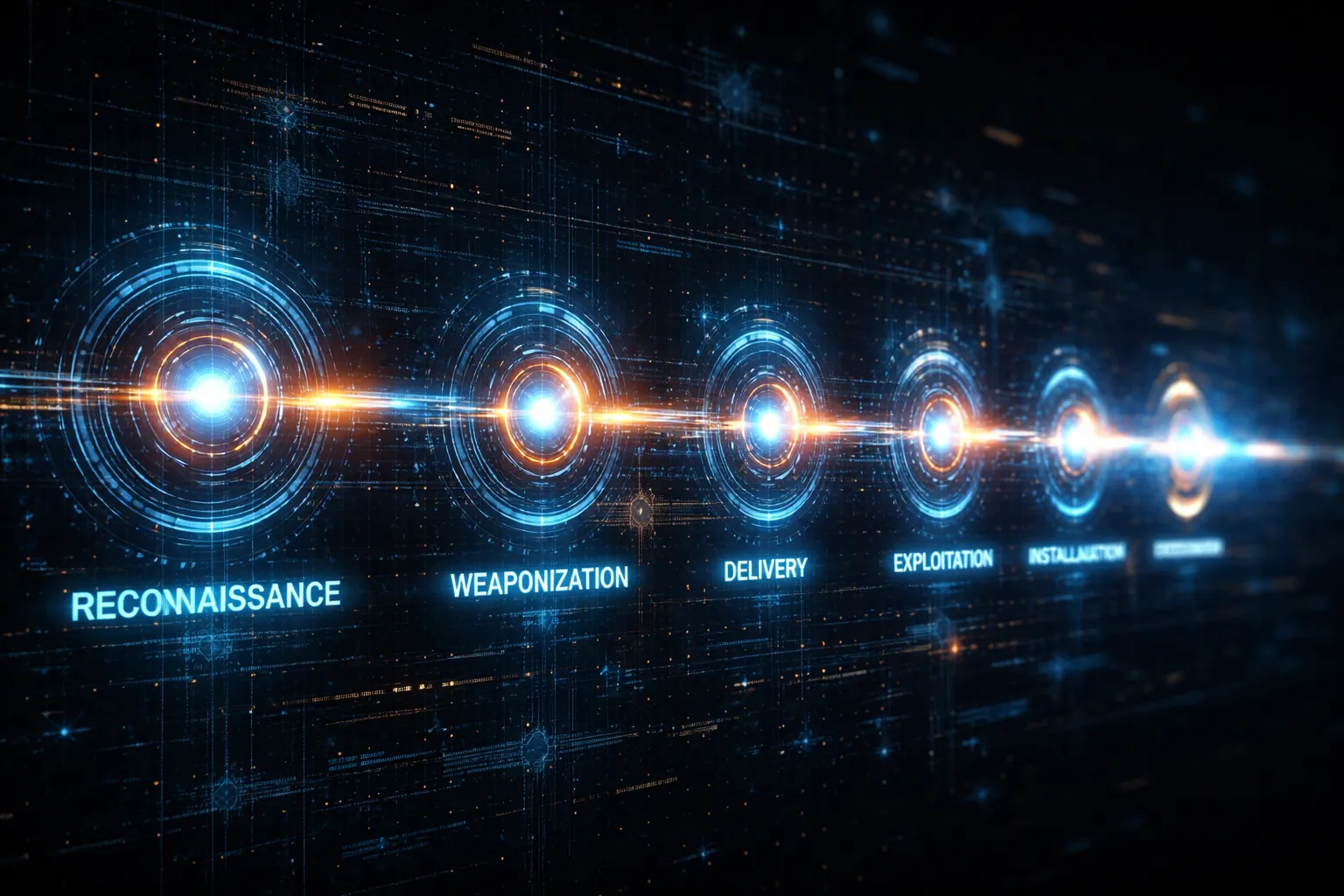
1. Reconnaissance & Scraping
Threat actors harvest high-quality audio and video samples from corporate keynotes, podcasts, and social media. They also map internal reporting structures.
2. Synthesis Generation
The scraped data trains machine learning models to generate synthetic assets, optimizing parameters to match the executive's specific emotional inflections.
3. The Multi-Channel Lure
The attacker initiates contact. An urgent email (BEC) is immediately followed by a cloned voicemail, establishing a false multi-modal "proof of life."
4. Exploitation
Convinced by the coordinated deception and under artificial pressure, the target bypasses controls and executes the requested wire transfer or credential handover.
The Out-of-Band Callback Protocol
The definitive defense against synthetic impersonation is the Out-of-Band Callback Protocol. Visual and auditory recognition are fundamentally compromised; only structured verification can be trusted.
Expand the mandatory steps required for all high-risk requests:
If a request arrives via email, verification must occur via phone. If it arrives via video/phone, verification must occur via a secure internal messaging app. Never verify on the same channel the request was received.
Always utilize contact information explicitly listed in the secure internal corporate directory. Do not use phone numbers, links, or reply-to addresses provided in the suspicious communication.
High-risk financial deviations or uncharacteristic data requests require independent, secondary confirmation from a direct manager or the finance control team before processing.
Knowledge Check
You receive an urgent email from a known vendor asking to update their banking details. They provide a new phone number in the email to call if you have questions. What MUST you do before processing the change?
Incident Response & Communications
When you suspect an impersonation or social engineering attempt, speed and discretion are critical. A delayed response allows attackers to pivot laterally to other employees.
Immediate Escalation
Notify the Information Security Team immediately via designated internal channels. Early reporting ensures network logs are preserved and containment actions begin.
External Silence
Employees are strictly prohibited from responding to the threat actor or making public comments without coordination from Legal and Corporate Communications.
No Rogue Investigations
Do not attempt to independently record, screenshot, or interrogate suspected attackers. Unauthorized engagement can compromise forensic integrity.
Knowledge Check
If you suspect a deepfake video message from an executive was sent to your team, what is the policy regarding external communication?
Key Takeaways
Digital impersonation requires a disciplined, protocol-first approach. Ensure these principles guide your daily operations.

Visuals Are Compromised
Never rely on audio or visual recognition alone. AI zero-shot cloning perfectly replicates human cadence and likeness.
Out-of-Band is Mandatory
Verify all high-risk requests using a separate communication channel and pre-validated internal directories.
Report Immediately, Remain Silent
Escalate anomalies strictly to InfoSec. Avoid engaging the attacker or communicating externally without authorization.
Final Assessment
You have completed the core material for Synthetic Media Risk Management.
You will now take a 4-question assessment to test your ability to apply the SOP.
You must score 80% or higher to pass and receive your certificate.
Assessment Question 1
What is the mandatory protocol before executing any high-risk financial transfer requested via an unexpected video call?
Assessment Question 2
Which of the following describes Business Email Compromise (BEC) when enhanced by synthetic media?
Assessment Question 3
What is the primary reason why relying solely on visual or auditory recognition is no longer sufficient for authorization?
Assessment Question 4
If a deepfake incident is suspected during an active operation, what is the most critical immediate action?